Fire protection has changed over the past few decades as buildings, technologies, and safety expectations have evolved. Earlier systems depended mainly on standalone smoke detectors and separate suppression equipment, which often worked in isolation. Today, smarter infrastructure is driving a new generation of integrated fire safety solutions in which detection and suppression work together seamlessly. Silver Foundation helps all these modern approaches, enabling faster response, improved reliability, and stronger protection for people, property, and critical assets.
Smart fire protection technologies are a combination of high-tech equipment and active safety precautions that ensure the safety of people and property. These systems not only identify the presence of fire early enough but also act wisely to reduce the damage.
They combine sensors, alarms, and automated suppression systems to produce a real-time continuous safety network. Companies and homes enjoy the advantage of 24/7 surveillance, prompt service, and minimized risk, guaranteeing security. Smart systems go beyond conventional fire safety, focusing on prevention, quick response, and adapting to various environments.
The Importance of Integrating Detection and Suppression
Fire safety involves combining suppression with detection. The early detection enables the systems to detect fire risks in real-time, whereas the automated suppression works to contain or put out the fire before it spreads. The synergy will ensure that property damages are reduced, risks to occupants are minimized, and business operations will not be interrupted.
The introduction of sensors, alarm mechanisms, and extinguishing mechanisms interconnected in a unified network enhances the response times greatly. Correct alerts, customized interventions, and adherence to safety standards are also achieved through integration, transforming the reactive fire management into a smart, proactive, and lifesaving one.
Key Components of a Smart Fire Protection System
Smoke and Heat Detectors
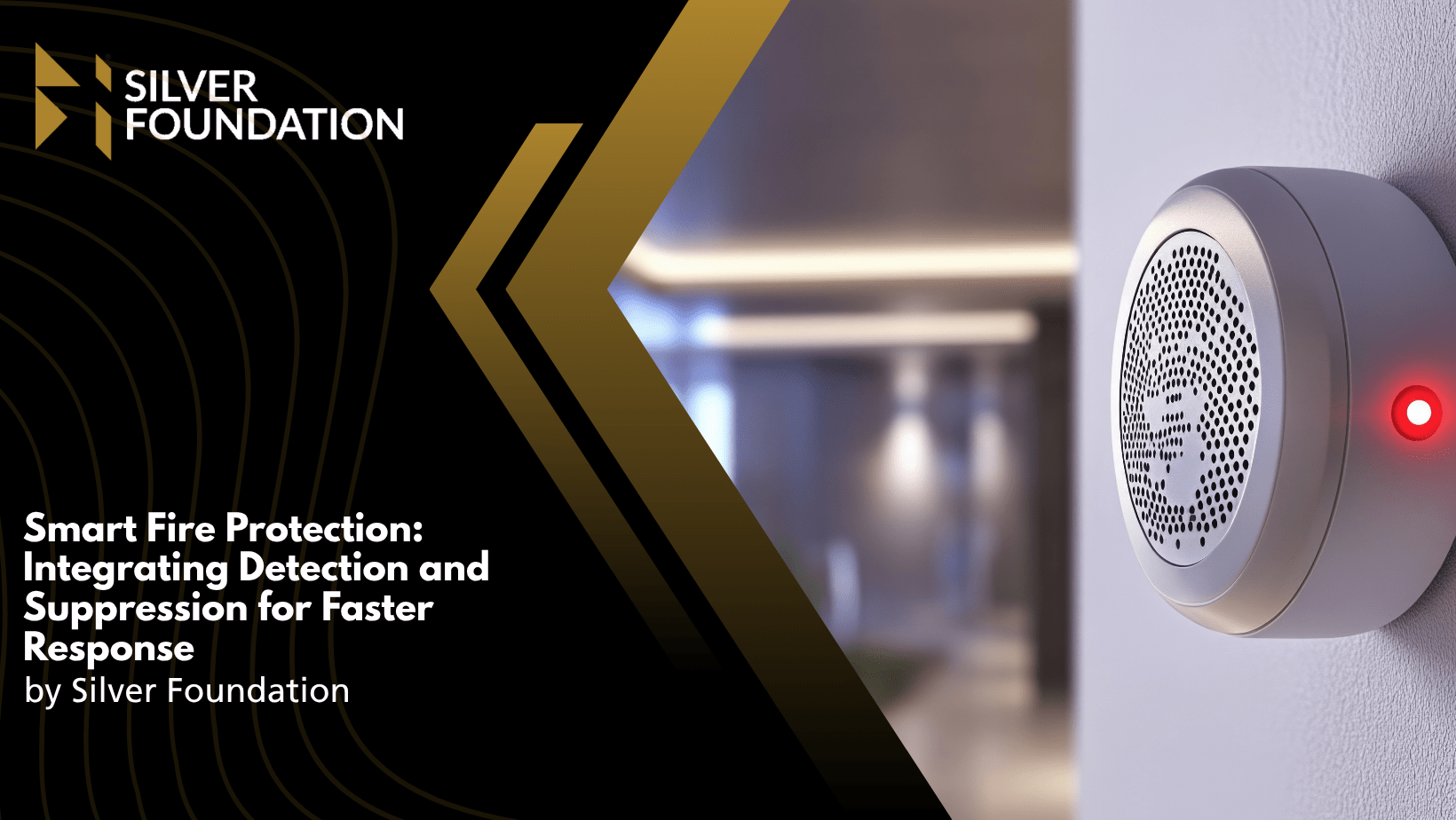
Modern detectors are sensitive to smoke, heat, or concentrations of gases. They give instant notices to the occupants and central monitoring stations. State-of-the-art detectors reduce false alarms while responding quickly to actual fire incidents. The placement strategies are well designed to embrace areas at high risk effectively.
Fire Alarm and Notification Systems
The alarms inform individuals through audible, visual, and digital messages. They can mingle with mobile notifications to be aware at a distance. The timely evacuation and communication of emergency responders is ensured due to multi-channel communication. Good systems are concerned with simplicity and the ability to reach them by all occupants.
Automated Compensation Systems
The sprinklers and chemical agents are also some of the suppression systems, which are automatically triggered when fire is detected. They are aimed at attacking flames and preventing maximum interference. They are programmable to various types of hazards, and so they can be optimally protected in diverse conditions.
Monitoring Interfaces and Control Panels
Control units are centralized to control system operations and give real-time feedback. They show notifications, monitor sensor conditions, and organize suppressing operations. Monitoring interfaces enable the security teams or facility managers to make informed decisions within a short time.
Emergency Power and Redundancy
It is reliable, which guarantees constant power when there is an outage. Backup systems can hold detection, alarm, and suppression features. Redundancy provides the protection of the components in case of failure, and even in case of critical situations, the protection will not be interrupted.
Common Applications of Smart Fire Protection
Intelligent fire protection systems are actively used in all kinds of fields to achieve a high level of safety and reduce losses. In business premises, including offices, shopping malls, and hotels, they protect human lives, as well as property. Industrial plants such as factories and warehouses are enjoying the advantages of early detection and automatic suppression to ensure that fire does not spread in places where flammable material is stored.
Data centers make use of modern systems to safeguard key equipment that is not water-damaged. Medical institutions need the most trusted solutions because it is challenging to evacuate patients. Even smart homes and apartment complexes are already embracing integrated fire protection systems to enhance safety and quick response.
Role of IoT and Artificial Intelligence in Smart Fire Protection
IoT and AI improve fire safety through the interconnection of sensors, devices, and cloud systems to keep track of the situation. AI evaluates data to forecast possible risks, identify abnormalities, and optimize the suppression policies. This preventative strategy minimises false alarms and enhances response accuracy.
IoT-powered systems will allow remote monitoring, automated reporting, and built-in building management solutions. This will result in quicker and smarter decision-making. Hence, all in all, AI increases the efficiency of the system in the long run and turns fire protection into proactive management and a dynamic, intelligent security system of people and property.
Challenges in Implementing Integrated Fire Protection Systems
Implementing the integrated fire protection systems has several challenges. There is a slow adoption due to high costs of installation, incompatibility with existing infrastructure, and complicated regulatory demands. Training and maintenance of the staff are essential to good operation. The IoT-enabled systems with connectivity dependency and security risks of cybersecurity should be well managed.
There must be a balance between technology and human control to ensure that the system does not go dead or give false alarms. These challenges can be overcome by planning, professional guidance, and repeated assessment. Hence, it is necessary to make sure that the advantages of integrated protection have a beneficial impact on safety, minimized damage, and prompt reaction are completely achieved.
Future Trends in Smart Fire Protection Beyond 2026
The future of fire protection is changing to intelligent and automated. The world is changing and creating new trends in the prevention, detection, and response to fires. Fire risk prediction will be based on AI and will be used to evaluate the conditions of the environment and predict the risk prior to its emergence. Building automation will allow fire systems to synchronize smoothly with smart building integration to allow faster and more effective response.
The improved sensor technologies will identify the signs of fire earlier, improve accuracy, and decrease the false alarms. Cloud-based remote monitoring and control will enable real-time monitoring at any location. Combined, these developments would ensure a safer building and more efficient emergency management.
Conclusion
In conclusion, investing in smart fire protection is essential for safeguarding lives and assets. Silver Foundation seamlessly combines advanced detection, automated suppression, and real-time analytics to enhance safety and operational resilience. As technology evolves, such integrated solutions will remain pivotal in creating secure, responsive, and reliable building environments.
Frequently Asked Questions
Why is integrating detection and suppression important?
It allows immediate activation, faster response, limits fire spread, and improves building safety.
How does IoT improve fire protection systems?
IoT enables real-time communication, centralized monitoring, faster alerts, and predictive maintenance.
Where are smart fire protection systems commonly used?
In commercial buildings, industrial facilities, hospitals, data centers, and smart residential complexes.
Are smart fire protection systems expensive?
Installation may cost more, but they reduce long-term damage and lower insurance premiums.